
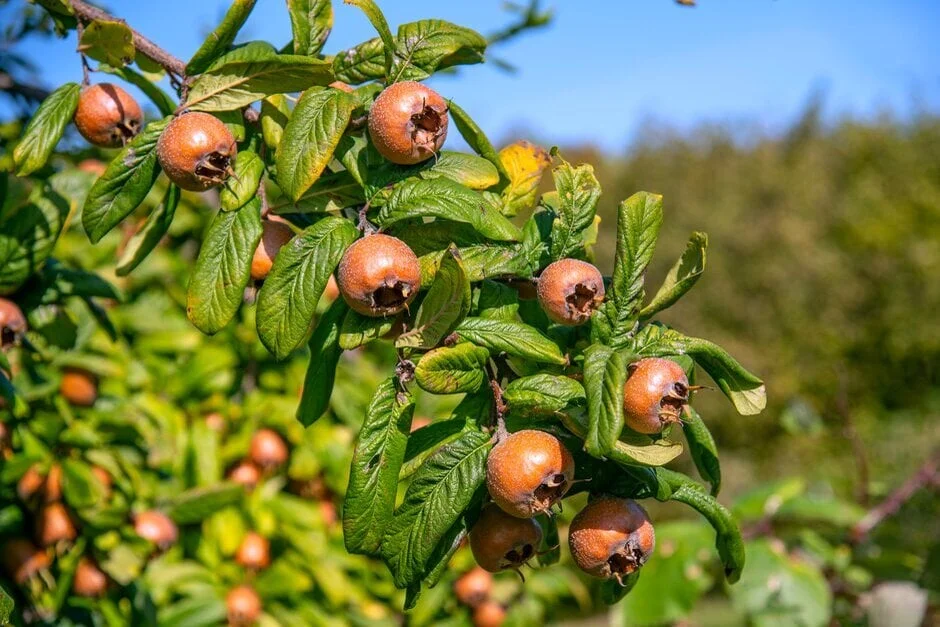
In recent years, many British gardeners have rediscovered older fruit varieties that once formed a normal part of the orchard. Apples, pears and plums dominate most gardens, yet there is increasing curiosity about unusual heritage fruit. Among these, the medlar stands out as one of the most distinctive. Though largely forgotten for decades, it is now attracting renewed interest from gardeners looking for something both traditional and different.
Medlars are small, slow-growing trees that suit the scale of typical UK gardens. They tolerate a wide range of soils, cope well with the British climate, and require relatively little maintenance once established. In spring they carry attractive white blossoms similar to single roses, while autumn brings golden foliage and unusual brown fruits that mature after harvesting through a process known as bletting. The flavour that develops during this stage is rich, aromatic and unlike most other orchard fruits.
Because of this combination of ornamental value and culinary heritage, medlars are increasingly being planted in gardens where space may only allow for a handful of fruit trees. Gardeners who already grow apples or pears often find medlars a useful addition that broadens the harvest season and introduces a piece of historic orchard culture.
The fruit trees specialists at ChrisBowers note that interest has grown steadily among gardeners researching medlar trees for sale as people look for fruit varieties that combine reliability with heritage character. They advise that medlars are particularly well suited to smaller orchards or mixed fruit plantings because the trees remain modest in size, rarely suffer serious pest problems, and can thrive in many parts of Britain provided the soil drains reasonably well.
For gardeners considering one, the question often becomes not whether a medlar is worth growing, but which variety to choose. While the range is smaller than that of apples or pears, several cultivars have proved especially reliable in UK conditions. Among them, three stand out for their combination of fruit quality, growth habit and adaptability.
Why Medlars Suit the British Garden
Part of the appeal of medlars lies in how naturally they fit into the traditional British gardening landscape. The tree, known botanically as Mespilus germanica, has been cultivated in Britain for centuries and was once common in medieval and Tudor orchards. Before imported fruits became widely available, medlars were valued for their ability to store well into late autumn and winter.
From a practical standpoint, the tree is straightforward to manage. Most grafted medlars grow between three and five metres in height depending on rootstock and pruning, making them suitable for modest gardens. They are generally self-fertile, so a single tree can produce fruit without needing a partner for pollination. This is particularly helpful where space is limited.
The timing of the blossom also works well in the UK climate. Medlar flowers usually open in late May, significantly later than many other fruit trees. This means the blossoms tend to avoid the late spring frosts that can damage earlier flowering species. As a result, crops are often more consistent than those of certain early pears or plums.
Soil requirements are also forgiving. While medlars prefer fertile loam, they will tolerate heavier clay or lighter soils provided the ground does not remain waterlogged. They also cope reasonably well with partial shelter, making them suitable for walled gardens or smaller plots surrounded by buildings or hedges.
Another advantage is their resistance to many common fruit tree diseases. Medlars belong to the same botanical family as apples and pears, but they are typically less susceptible to issues like scab. Routine pruning to maintain an open structure is usually sufficient to keep the tree healthy.
For gardeners browsing catalogues or nurseries offering medlar trees for sale, these qualities make the species appealing for beginners as well as experienced orchard enthusiasts. A medlar tree rarely demands the same level of ongoing attention as high-maintenance fruit varieties.
However, selecting the right cultivar still matters. While medlars share many characteristics, some produce larger fruits, others offer better flavour, and a few develop more attractive tree shapes for ornamental planting.
Nottingham Medlar: The Reliable Classic
Among British medlars, the Nottingham variety is widely regarded as the most dependable. It has been grown in the UK for generations and remains one of the easiest choices for gardeners planting their first medlar tree.
The Nottingham medlar forms a compact, well-balanced tree with a naturally rounded shape. This makes it suitable for smaller gardens where a tidy outline is desirable. The growth is steady rather than vigorous, which means pruning requirements are modest. Once the framework of branches has developed, annual maintenance usually involves only light thinning.
In spring, the tree produces large white blossoms that resemble single wild roses. These flowers attract pollinators such as bees and hoverflies, contributing to the broader health of the garden ecosystem. Because the blossom appears relatively late, it generally escapes frost damage in most regions of the UK.
The fruit of the Nottingham medlar is smaller than that of some other cultivars, but it is known for its excellent flavour once bletted. After harvesting in late autumn, the fruits are stored in a cool place until the flesh softens and turns brown. At this stage they develop a rich taste often described as a blend of apple butter, dates and spiced pear.
This variety also suits gardeners interested in culinary experimentation. Bletted medlars can be eaten fresh with a spoon, or used in traditional preserves such as medlar jelly, cheese and chutney. Historically, medlar jelly was valued for its clear amber colour and distinctive flavour.
From a horticultural perspective, Nottingham is also hardy and adaptable. It performs well across much of England and Wales and can succeed in sheltered areas of Scotland. Provided the tree receives adequate sunlight and the soil drains reasonably well, it will often bear reliable crops for decades.
Dutch Medlar: Larger Fruit and Strong Growth
While Nottingham is often recommended as the classic choice, the Dutch medlar offers an alternative for gardeners seeking larger fruit and a slightly more vigorous tree. This variety has been cultivated across Europe for centuries and adapts well to British conditions.
The most obvious difference is fruit size. Dutch medlars tend to produce noticeably larger fruits than the Nottingham variety, sometimes reaching nearly twice the diameter. For gardeners interested in cooking or preserving, this can be a practical advantage because the larger fruits provide more usable pulp.
The tree itself develops a somewhat broader canopy, making it well suited to planting as a focal point in a lawn or orchard setting. In spring the blossom display can be particularly striking, with large white flowers standing out against fresh green foliage.
Because the Dutch medlar grows slightly more vigorously, it benefits from occasional structural pruning during the early years. Establishing a strong framework helps support the weight of future crops and maintains a balanced shape. After the initial training period, maintenance remains straightforward.
In terms of flavour, the Dutch medlar offers a slightly milder taste than Nottingham but still develops the distinctive richness associated with bletted fruit. Many gardeners enjoy using it in traditional recipes, particularly jams and fruit cheeses where its natural sweetness becomes more pronounced.
Another advantage is the tree’s adaptability to a range of soil conditions. Like most medlars, it prefers fertile ground but will tolerate heavier clay soils that are common in parts of southern and central England. This resilience makes it a useful option for gardeners whose soil may not be ideal for more demanding fruit trees.
For those exploring heritage fruits for the first time, the Dutch medlar represents a good balance between ornamental value and productive capacity.
Royal Medlar: A Distinctive Heritage Variety
The Royal medlar is less commonly planted than Nottingham or Dutch varieties, yet it remains one of the most intriguing options for gardeners interested in historic fruit trees. It has long been associated with traditional European orchards and offers distinctive fruit characteristics that set it apart.
One of the defining features of the Royal medlar is its unusually shaped fruit. The fruits are generally broader and flatter than those of other cultivars, often described as having a more open crown at the base. This distinctive appearance makes them easily recognisable during harvest.
The tree itself tends to grow with a graceful spreading habit that suits ornamental planting. When allowed to develop naturally, it forms an attractive silhouette that works well near lawns or pathways where the structure of the branches can be appreciated.
Like other medlars, the Royal variety flowers late in spring, producing single white blossoms that are both decorative and beneficial to pollinating insects. The foliage often develops warm yellow tones in autumn, adding another seasonal element to the garden.
In terms of fruit quality, the Royal medlar is valued for its rich flavour once bletted. Many enthusiasts consider it one of the most characterful varieties for traditional medlar desserts. The pulp becomes soft and aromatic, lending itself well to classic British recipes such as medlar jelly or spiced preserves.
Because it is less widely grown, the Royal medlar sometimes appeals particularly to gardeners interested in preserving rare or historic fruit varieties. Planting such cultivars helps maintain horticultural diversity while reconnecting with orchard traditions that once played a larger role in rural Britain.
While the tree may require a little patience before reaching full productivity, the long lifespan typical of medlars means the reward can last for decades.
Growing Medlars Successfully in the UK
Although medlars are relatively undemanding trees, a few basic considerations help ensure good growth and consistent fruiting. Choosing a suitable planting site is the first step. Ideally, the tree should receive full sun for most of the day, though light shade is usually tolerated.
Soil preparation also contributes to early success. Digging a generous planting hole and incorporating organic matter such as compost improves soil structure and encourages root development. In heavier clay soils, ensuring adequate drainage is particularly important.
During the first few years, young medlar trees benefit from regular watering in dry spells while the root system establishes. Once mature, however, they become relatively drought tolerant compared with many fruit trees.
Pruning is generally simple. Medlars naturally develop a somewhat open branching pattern, but light winter pruning helps maintain shape and encourages healthy airflow through the canopy. Removing dead or crossing branches is usually sufficient.
Harvesting takes place in late autumn when the fruits have reached full size but are still firm. They are traditionally picked before the first heavy frosts and then stored indoors until the flesh softens. This bletting stage transforms the fruit from hard and astringent to soft, sweet and richly flavoured.
For gardeners browsing nursery catalogues or researching medlar trees for sale, it is worth remembering that these trees are slow but steady growers. Patience during the early years often leads to a long-lived tree capable of producing fruit well into the future.
In a gardening culture increasingly interested in heritage varieties and resilient plants, medlars are quietly reclaiming their place in British gardens. Whether choosing the dependable Nottingham, the generous Dutch, or the distinctive Royal medlar, gardeners gain not only an unusual fruit but a small piece of orchard history that continues to thrive in the modern landscape.
